
Founder · Financial planner
Marina Longpre, Pl. Fin.
Founder and strategist of the firm. Specialized in portfolio management for executives, professionals, and families in transition.
Portfolio management · wealth transfer
Investissements De Longpre · Québec
Investissements De Longpre is an independent firm of financial planners and investment advisors. Financial planning, portfolio management, and retirement strategy — serving the Montréal area and surroundings.
Free guide
How to turn retirement capital into durable, tax-efficient income. 8-page PDF, delivered instantly to your inbox.
No spam. Unsubscribe in one click.

Founder
Marina Longpre, Pl. Fin.
“Wealth is built over the long term, not over a quarter.”
Why De Longpre
Core practice
Five areas of practice that shape the growth and transfer of your wealth. Every mandate is led by an accredited planner, backed by the full team.
Advisory or discretionary mandates, disciplined diversification, alignment with your horizon and risk tolerance. Periodic review and transparent reporting.
RRSP, RRIF, LIRA, LIF: accumulation and decumulation strategies optimized for tax, longevity, and the lifestyle you're targeting.
RRSP, TFSA, RESP, LIRA, FHSA and non-registered accounts. A coherent account architecture that puts every dollar to work in the right place.
Efficient wealth transfer, testamentary trusts, post-mortem taxation. Coordinated with your notary and tax advisor for a complete plan.
Complementary coverage
To round out your financial plan, our brokers can secure the coverage your strategy needs through our network of partner insurers. Business-owner-specific structures can protect and accelerate overall accumulation by creating tax savings between the corporation and its owner.
Integrated into the overall plan — never sold without relevance.
Expansion
Marina Longpre founded Investissements De Longpre with a clear vision: serve clients with the depth of a large firm and the intimacy of a private practice. That double requirement shapes every decision, with the client first.
Over recent years, the firm has grown significantly. Through acquisitions and referrals, we have integrated new advisors and specializations. Each addition deepens our expertise, without ever diluting the rigour of the relationship.
“Walking alongside clients through their accumulation and growing their wealth isn’t everything. Thoughtful guidance from an experienced financial planner is needed to optimize tax-efficient retirement withdrawals — letting clients leave more meaningful legacies or enjoy more of their retirement.”
2019
Montréal area
5+
$70M+
Remote
Montréal area and surroundings
Video meetings
Remote sessions, at your pace
In person
By appointment — greater Montréal, North Shore, Laval, Lanaudière and Laurentians

About the founder
Founder · Financial planner
Marina Longpre has led Investissements De Longpre since its founding. An accredited financial planner, she built the firm around a simple principle: the quality of advice is measured over ten, twenty, thirty years — not over a quarter.
Her personal practice focuses on complex mandates — executives, professionals, real-estate owners, families in transition — but today the firm includes several planners and advisors who carry client mandates with the same rigour, each with their own specialty.
“The value of advice is unmatched — it goes far beyond a simple investment.”Read full bio
Our team of advisors
Investissements De Longpre brings together financial planners, investment and insurance advisors, plus an extended network of professional referrals. Each client is led by a dedicated advisor and supported by the specialization of the full team.
Founder · Financial planner
Founder and strategist of the firm. Specialized in portfolio management for executives, professionals, and families in transition.
Portfolio management · wealth transfer
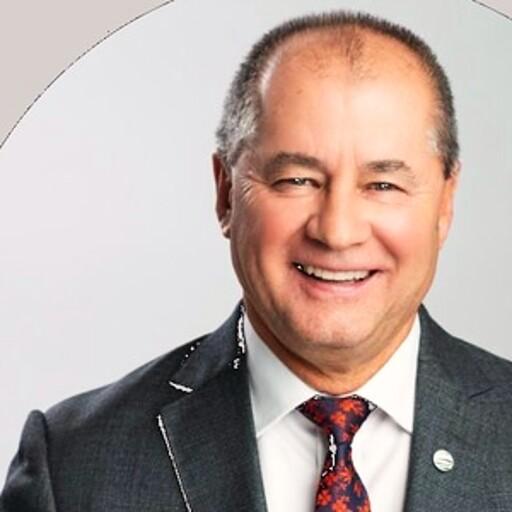
Financial planner
Financial planner specialized in group insurance for large organizations.
Group insurance · large organizations

Investment advisor
Investment advisor dedicated to growth and aggressive markets. Building bold portfolios.
Growth · aggressive markets
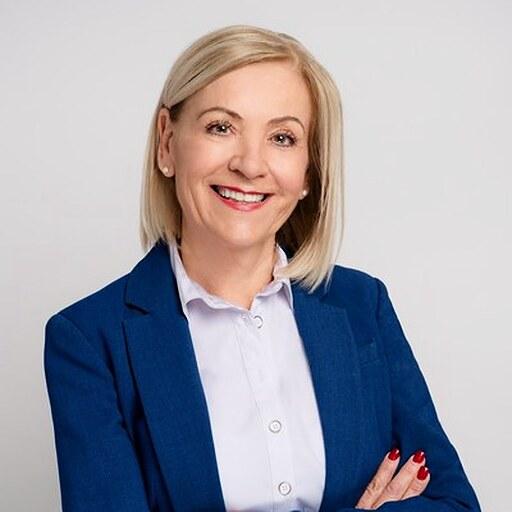
Financial planner
Financial planner and investment portfolio manager specialized in retirement planning.
Retirement planning
Our team is growing — we welcome new advisors each year as the firm integrates new offices.
Frequently asked questions
Direct answers — no jargon — to the questions future clients raise before a first meeting.
As early as possible, but it's never too late. A serious retirement plan is typically built over 15 to 25 years: accumulation horizon, decumulation strategy, taxation, longevity. We start with an assessment of your current situation, then model several scenarios to identify the decisions to take now — and those that can wait.
An investment advisor builds and monitors your portfolio. A financial planner (Pl. Fin.) holds a Québec accreditation covering seven domains: personal finance, investments, tax, retirement, estate, protection, and legal. At De Longpre, mandates are led by planners — a higher standard than simple portfolio management.
[to be filled — to confirm with Marina: fees, commissions, hybrid structure]. We believe in full transparency on compensation and discuss it openly at the first meeting, before any commitment.
Yes. Transfers between financial institutions are routine and, in most cases, have no tax impact (T2033 form for RRSPs, direct transfer for TFSAs). We handle the full administrative process. Depending on your situation, we can consolidate your accounts or maintain certain existing structures if they serve your strategy.
Yes. Estate planning is part of our core practice — not an ancillary service. We coordinate transfer strategies with your notary and tax advisor: will, testamentary trust, estate freeze, beneficiary designations, taxation at death. The goal: a coherent plan, not a sum of isolated decisions.
[to be filled — to confirm with Marina]. We take on clients at different stages of wealth-building, and our mandates adapt to the complexity of each situation rather than a rigid threshold.
Three steps: a realistic retirement budget (including travel and surprises), a 25-30 year projection accounting for inflation and decumulation sequence, and several risk scenarios. 61% of Canadians fear running out — often wrongly. A numbers-based plan dissolves that fear.
To minimize tax in your lifetime: start RRSP/RRIF withdrawals early (60-65), top up with the non-registered account, save the TFSA for last. If the priority is maximizing the estate, the order changes. Never a generic answer — built from your objectives.
No. No funds ever pass through a representative’s hands — no cash, no cheques. The financial institutions withdraw directly from the client’s bank account, and the money is invested with recognized institutions (Fidelity, Manulife, AGF, Mackenzie, CI Investments, BMO Investments, and others). The advisor’s role is to analyze your situation, recommend a suitable strategy, and follow up over time. Advisors are service intermediaries and never hold your funds personally.
You have access at all times: secure online platforms with returns updated daily, official statements every quarter (by mail or online), and the Investia mobile app. You can track your investments independently, as often as you like.
Your investments are held at regulated institutions overseen by the AMF and both levels of government. You receive official statements issued directly by those institutions, and you are protected by CDIC deposit insurance. Transactions are regulated and traceable, and every representative must maintain a clean record, with no complaints to the CSF or the AMF.
In those cases, the money was cashed directly by the fraudulent firm, at a time when the industry was far less regulated. In your situation: your money is held by a recognized, independent institution, you receive confirmations directly from that institution, and the money never passes through the representative’s account. Today, it is the fund company that withdraws from and deposits directly into your account.
In Quebec, only 3% of advisors hold the financial planner designation. This designation allows for in-depth advice covering legal aspects, insurance, investments, retirement, personal and corporate taxation, finance, and estate planning. Each planner on the team has deep expertise in specific areas, which provides a far more comprehensive approach than an advisor specialized solely in investments or insurance — reviewing protection mandates, wills, cohabitation agreements, and marriage contracts; analyzing corporate structures for tax optimization; and advanced financial planning for retirement or death.
It depends on the interest rate of the debt and your attitude toward risk. If the debt costs more than the potential return on investments, it is generally better to pay it down. If it costs less, investing may be advantageous. Above all, we consider your attitude toward risk.
In a diversified portfolio, even an aggressive one, a 100% loss is extremely unlikely. To lose everything, every company you are invested in would have to go bankrupt at the same time — highly improbable. Your money is spread across several types of companies and bonds, across different sectors, with geographic diversification.
During the 2008 financial crisis, mutual funds saw a decline of roughly 30 to 35% at their worst point. A 30% loss does not materialize until a withdrawal is made from the account. Normally, by staying invested, it takes about 1 to 2 years to recover from a significant loss.
A single index, however strong, does not provide complete diversification. Investing only in the S&P 500 means being concentrated in a single market — the United States — and exposed to a few dominant sectors such as technology: too many eggs in one basket. Diversification spreads risk across several countries and economies, includes different asset types (stocks, bonds), and reduces the impact of a decline in any single market. In a downturn, a diversified portfolio often holds up better and the overall decline is cushioned.
The main difference is freedom of choice. An independent planner can offer investments from several institutions, selects products based on their relevance and performance, tailors recommendations to your situation, and is not tied to a fixed product lineup. A bank mainly offers its own products, has a more limited selection, and may propose in-house solutions even when better options exist elsewhere; staff turnover at banks also weakens the trust relationship. Note: bank products can be relevant and are used when appropriate, in the client’s interest — the difference is the ability to compare and choose.
There is no fee for a first in-home meeting.
Our firm holds over 100 years of cumulative experience in financial advice and financial planning.
Our values are centred on advice rather than product, on efficient portfolio management, and on optimizing gains and tax planning.
Financial planner; alternative markets licence; exchange-traded funds (ETFs); derivatives; financial security advisor; accident and sickness insurance advisor; group insurance and annuities advisor; segregated funds advisor; mutual fund dealing representative, registered with Investia Financial Services Inc.
A question not covered here? Write to us.
Contact us